Welcome to SvaraYatra

Where Every Raga
Tells a Story

The definitive journey through five thousand years of India's
most profound musical heritage

Scroll
Svarika, your guide to Indian classical music
Your Guide

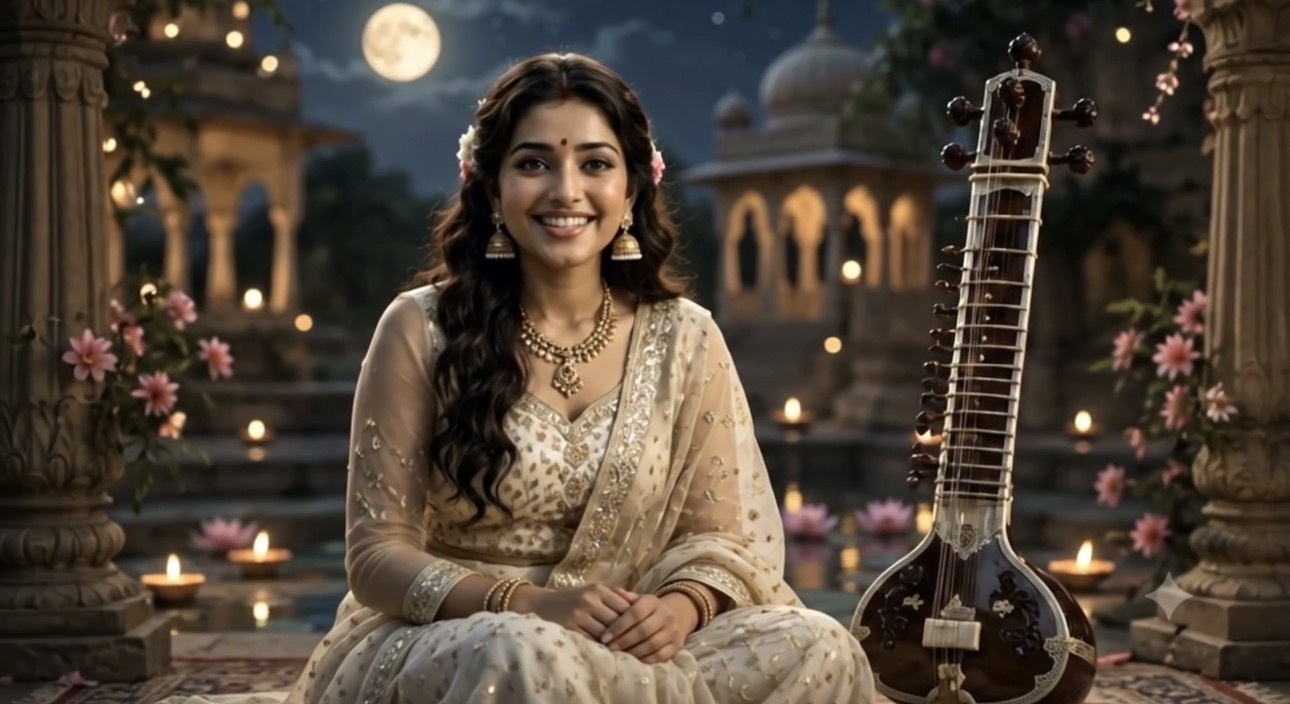
Meet Svarika

Custodian of the Raga World

Welcome to SvaraYatra, a journey through sound, time, and soul. I am Svarika, your companion on this exploration of Indian classical music's greatest gift to humanity: the raga.

Whether you are hearing a raga for the very first time, or you have spent decades in its company, this is a place to deepen your understanding, refine your listening, and discover the extraordinary depth of a tradition that has shaped the consciousness of a civilization for five thousand years.

Each raga is not merely a scale or a set of rules. It is a living melodic personality, a grammar of feeling, a world of sound with its own emotional truth, its own time of day, its own mythological resonance. To enter a raga is to enter a state of being.

Learn more about Svarika →
"
Nada Brahma: Sound is Brahman. In the beginning was the word, and the word was sound, and from that primordial vibration the entire cosmos arose.
Ancient Vedic Teaching, Nada Brahma Upanishad
The Living Tradition

Five Thousand Years
of Musical Intelligence

Indian classical music is one of humanity's oldest and most sophisticated musical traditions. Unlike many art forms, it has never been frozen in time. It is a living system, still evolving, still improvised, still transmitted from teacher to student in an unbroken human chain.

At its heart is the raga, a concept with no true equivalent in Western music. A raga is not merely a scale. It is a melodic personality: a complete system of notes, phrases, emphases, ornaments, and emotional associations that together create a unique world of sound. Two ragas can use identical notes yet sound completely different, because what defines a raga is not its material but its character, its movement, its feeling.

The tradition is organized around two major streams: Hindustani music in the north, shaped over centuries by both ancient Sanskrit theory and the Persian cultural exchange of the Mughal era; and Carnatic music in the south, which maintained closer ties to the ancient Sanskrit theoretical foundations while developing an extraordinary compositional tradition. Both are built on the twin pillars of raga and tala (melody and rhythm), and both sustain elaborate systems of improvisation within deeply disciplined frameworks.

~3000Years of documented history
500+Ragas in active tradition
TwoMajor classical traditions
Svarika's World

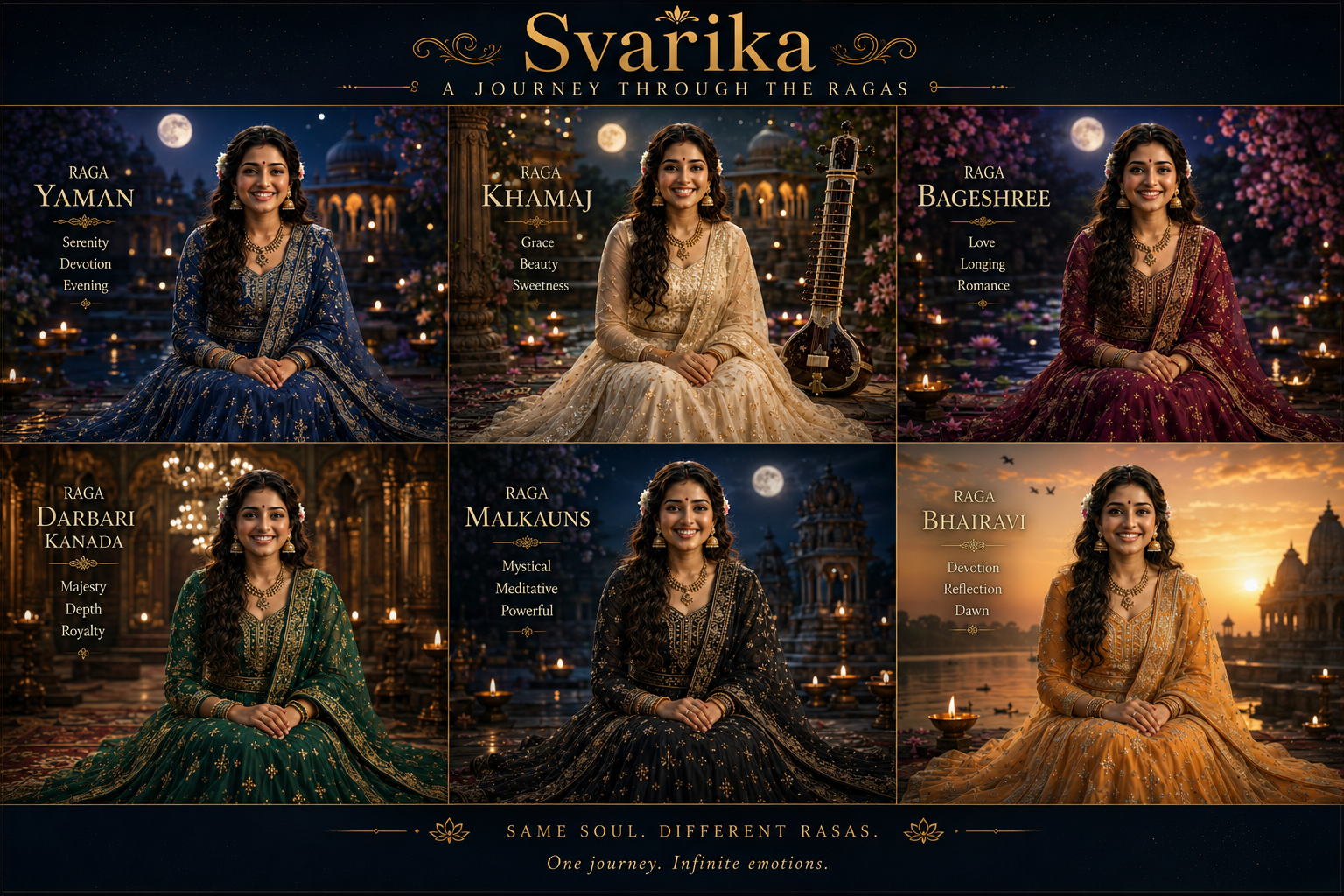
A Raga for Every Season

Each raga has its own mood, its own time, its own visual world. Svarika embodies them, dressed in the colours and spirit of each raga she presents.

SvaraYatra on YouTube

The Music Awaits

SvaraYatra's YouTube channel is where the music comes alive. Subscribe to join thousands of listeners discovering the world of Indian classical music for the first time, and for the ten-thousandth.

Subscribe on YouTube →